
Motorway and Carwow for Trade Buyers: What Dealers Need to Know
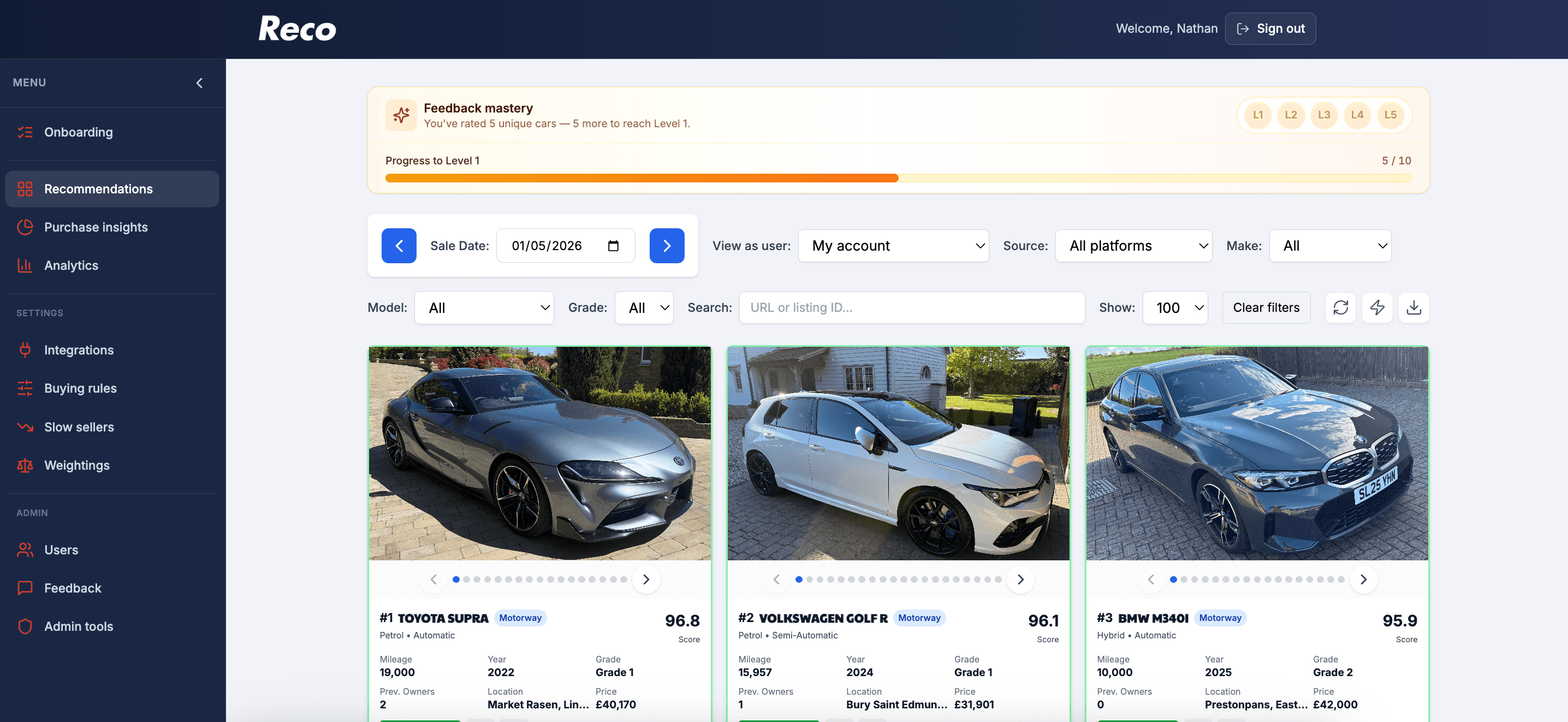
Motorway and Carwow started life as consumer-facing products. Motorway was built to help private sellers get a competitive offer for their car without the hassle of private sale. Carwow was built to help buyers find and configure new cars and, later, to simplify the part-exchange process. Neither was primarily designed with trade buyers in mind.
Both have since developed significant dealer-facing buying channels, and both are increasingly part of the sourcing mix for active buying operations. This article is a practical overview of what each platform offers trade buyers, how they differ from traditional auction, and where they fit in a balanced sourcing strategy.
How Motorway and Carwow became relevant to trade buyers
The shift toward online car selling by private individuals created a new supply source that traditional auction had not systematically captured. Private sellers with a late-model, retail-condition car — one owner, full service history, no finance — had historically either sold privately, accepted a low part-exchange offer from a dealer, or put the car through auction at a price that reflected the uncertainty of the channel.
Motorway addressed this by creating a competitive bidding environment where registered dealer buyers compete for individual private-seller cars. The seller gets a stronger offer than a single dealer part-exchange. The buyer gets access to retail-condition stock that might not appear at auction.
Carwow followed a similar logic from a different starting point. Its position in the new car buying journey gave it natural access to part-exchange stock, which it has progressively developed into a trade buying product. Its consumer brand strength means it attracts sellers who might not consider other channels.
What stock tends to appear on Motorway — and what makes it attractive
Motorway's supply is predominantly private-seller stock: one-owner or low-owner cars, typically within five years old, often with main dealer service history and below-average mileage for their age. The platform's design incentivises sellers to present their car honestly — full condition disclosure, accurate mileage, clear history declaration — because competitive bidding means the seller gets a better result from transparency.
For dealers, this produces a category of stock that is relatively rare at traditional auction: retail-presentation cars with documented history, sold by an individual who has maintained them for personal use rather than fleet or business use. These cars often require less preparation before retail, which affects the true cost of acquisition even if the purchase price is higher than comparable auction stock.
Carwow's trade buying channel — how it works and what to expect
Carwow's trade buying offer operates somewhat differently from Motorway's pure auction model. Stock on Carwow includes part-exchange vehicles from its new car transaction platform — cars traded in as part of a new purchase facilitated through Carwow — as well as direct seller stock from private individuals.
The buying process on Carwow involves dealer accounts accessing listed stock, making offers, and in some cases negotiating with sellers or the platform. The condition information and imagery quality varies more than on Motorway, partly reflecting the broader range of vehicles and seller types.
The key differences between Motorway and Carwow and traditional auction
There is no live bidding pressure on Motorway or Carwow in the same way as a live auction. This changes the decision dynamic significantly. At a live auction, hesitation costs you the car. On Motorway, bidding windows are longer and the process is more considered.
Pricing dynamics are different. Auction prices are set by competitive bidding among a large pool of buyers, and CAP benchmarks are well-understood reference points. Motorway prices are also set competitively but among a different and sometimes smaller pool. Individual cars can trade at a premium if demand is high, or below what you might expect if fewer buyers are active on a specific profile.
Condition expectations are different too. Motorway and Carwow stock is assessed more through seller disclosure and platform imagery, less standardised against a universal grading framework. Experienced auction buyers sometimes find this adjustment difficult.
Where these platforms fit in a balanced sourcing strategy
Neither Motorway nor Carwow should be thought of as replacements for BCA and Manheim. They fill a different part of the sourcing mix.
BCA and Manheim provide volume, liquidity, and consistent supply across a wide range of models and price points. They are the backbone of most active buying operations.
Motorway and Carwow provide access to retail-condition private-seller stock that rarely appears at auction, and to a seller population motivated to transact quickly at a fair price. For dealers targeting specific profiles — recently registered, well-maintained, full history — these platforms are worth active coverage.
The practical question is resource allocation. Time spent monitoring Motorway and Carwow is time not spent on BCA and Manheim. Dealers need to assess whether the incremental stock quality and deal opportunity from these platforms justifies the additional workflow burden. For many, the answer depends on whether that burden can be reduced.
Managing Motorway and Carwow alongside your auction activity
Adding Motorway and Carwow to an existing BCA and Manheim workflow without adding significant time cost requires a different approach to the sourcing process. The platforms cannot simply be appended to a daily routine that is already at capacity.
The dealers who successfully integrate all four channels tend to do so by collapsing the search and assessment burden — using tooling that aggregates across all channels simultaneously rather than running sequential searches on each. This preserves coverage without multiplying the time cost.
The alternative — monitoring all four platforms independently — is theoretically possible but practically leads to either superficial coverage of some channels or unsustainable time demands on the buying team.
Reco includes Motorway and Carwow stock alongside BCA and Manheim — so you see the best available car across all four channels in one ranked shortlist every morning. Start your free trial · How to add an integration · Founding members