
BCA vs Manheim for UK Dealers: Which Auction Platform Is Right for Your Dealership?
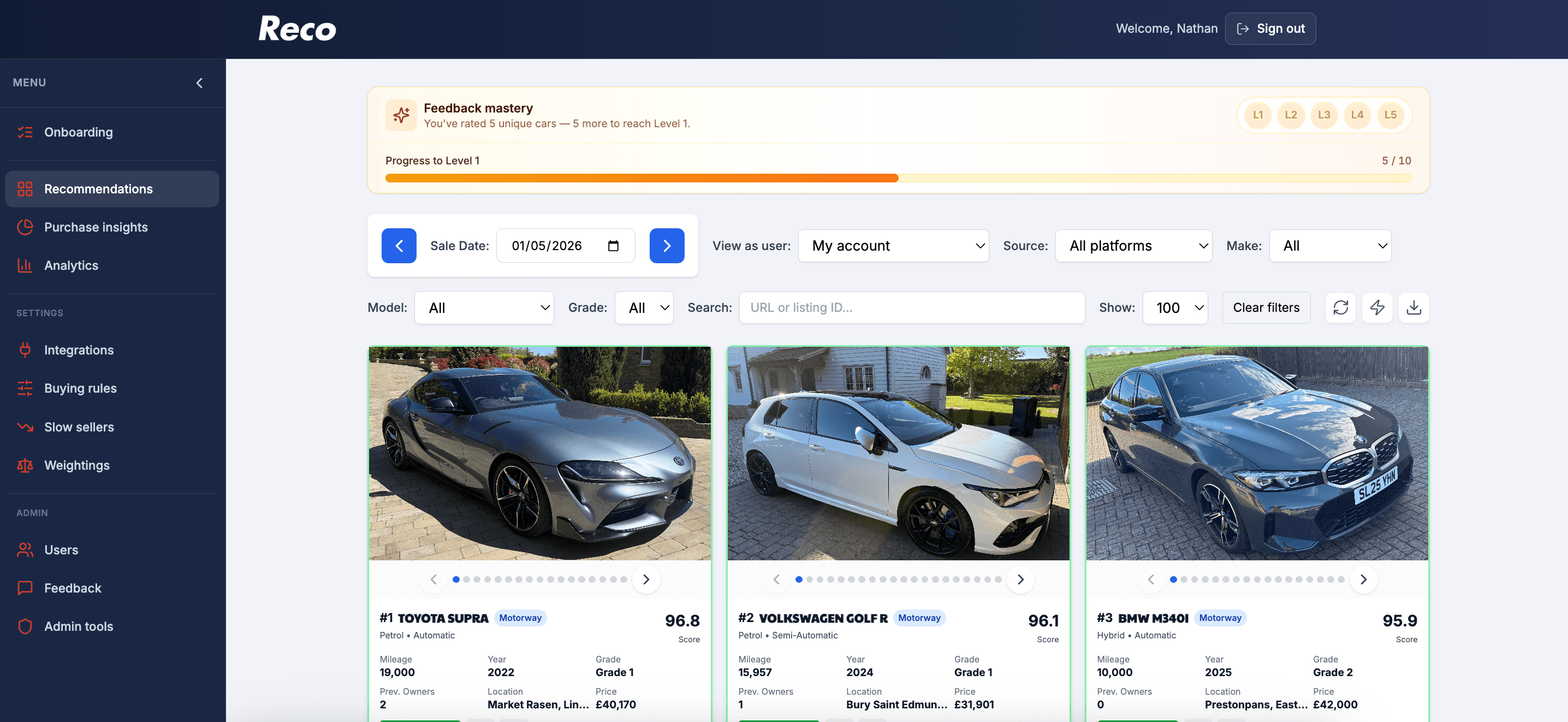
If you are buying used car stock in the UK trade market, you are almost certainly working with BCA, Manheim, or both. Between them, these two platforms handle a substantial majority of UK wholesale volume: the finance returns, fleet de-fleets, manufacturer remarketing programmes, and dealer part-exchange overspill that keeps the used car market supplied.
Dealers regularly ask which platform they should prioritise. The honest answer is that they are not alternatives — they serve overlapping but distinct supply sources, and a buying operation that ignores either is leaving stock on the table. But understanding the differences between them helps you work each one more effectively.
BCA and Manheim — the two dominant trade auction platforms in the UK
BCA, now part of the Constellation Automotive Group alongside Cinch and WeBuyAnyCar, is the largest vehicle remarketing business in the UK by volume. It operates a network of physical sale centres as well as a significant and growing online auction capability. BCA Assured, its online-only proposition, allows dealers to buy from any location with standardised condition reports and imagery.
Manheim, part of the Cox Automotive group, is BCA's main competitor at scale. Manheim operates its own network of remarketing centres and has historically been particularly strong in fleet and lease remarketing, with close partnerships with major leasing companies and fleet operators.
Both platforms have invested heavily in digital infrastructure over the past decade. The idea that auction buying means physically attending a sale centre is increasingly outdated — a significant proportion of purchasing on both platforms now happens remotely.
Where BCA stock typically comes from — and what that means for buyers
BCA's supply mix is broad. The platform handles finance returns — cars coming back at the end of PCP and PCH agreements — which is a substantial and predictable source of late-model, relatively low mileage stock. It handles manufacturer remarketing programmes, where OEMs sell demonstrators, pre-registered vehicles, and short-cycle rental returns. And it handles a large volume of dealer part-exchange overspill.
For buyers, this breadth means BCA typically has strong volume and a wide spread of makes and models. Grade descriptions on BCA range from Gold (exceptional) through grades 1 to 5, with Grade 1 being the quality threshold most experienced buyers target for retail-standard stock.
Where Manheim stock typically comes from — and how it differs
Manheim's supply is weighted more heavily toward fleet and lease de-fleet. Major leasing companies, fleet management providers, and local authority fleets regularly use Manheim as their primary remarketing channel. This means Manheim often has particularly strong availability in specific segments: mid-size executive cars, fleet-spec company cars, and certain van and light commercial categories.
Manheim has also invested in Dealer Auction, a digital remarketing tool that allows vendors to trade stock directly with a network of registered dealers — a hybrid between traditional auction and bilateral trade that sits alongside the core auction offer.
Manheim's fleet concentration can be an advantage for dealers specifically targeting company car profiles — often full service history, known ownership, reasonably predictable mileage — or a limitation for dealers looking for the broader stock mix that BCA provides.
Grading, condition reports, and what to trust on each platform
Condition grading is one of the most important variables in auction buying, and understanding how each platform's grading system works is essential knowledge for experienced buyers.
BCA's Gold grade is the highest available and represents vehicles in exceptional condition. Grade 1 is the benchmark for retail-ready stock. Grades below 1 typically indicate cosmetic or mechanical issues that require assessment and preparation cost calculation before bidding.
Manheim uses its own assessment framework with detailed condition reports that break down bodywork, mechanical, and interior condition separately. The level of detail is generally strong for fleet-originated stock, which tends to have clear maintenance records and consistent assessment standards.
Both platforms use professional graders, and the grading is generally reliable — but experienced buyers know that photographs and condition report language can still leave ambiguity, particularly for older or higher-mileage stock.
Practical differences in the buying experience
BCA's interface is broadly functional if not always intuitive. BCA Assured sales run on a timed bidding model that gives buyers time to consider and bid without the pressure of a live auctioneer.
Manheim's digital platform has been progressively improved and generally receives reasonable marks from regular users for search functionality and condition report accessibility. Live online sales on Manheim run with real-time bidding connected to the physical auction room, which creates a different dynamic from timed online-only sales.
Both platforms charge buyer fees on top of the hammer price. These fees vary by vehicle price point and buyer account type and should always be factored into margin calculations before bidding. Not accounting for buyer fees in CAP-based margin calculations is a common and costly mistake for less experienced buyers.
Should you use both — and how to manage it without doubling your workload
For most active buying operations, the answer is yes — use both. The supply sources are different enough that focusing exclusively on one platform means systematically missing a meaningful category of stock.
The practical challenge is workflow. Two platforms means two search sessions, two sets of shortlists, two sets of notifications, and two sets of sale timings to manage simultaneously. For a buying manager already stretched across multiple responsibilities, this is a real operational burden.
The solution that an increasing number of dealers are moving toward is aggregation tooling — platforms that pull BCA and Manheim stock into a single interface, apply your buying rules across both simultaneously, and surface a combined shortlist rather than requiring you to work each channel separately.
Reco aggregates BCA and Manheim stock into one ranked feed — so you do not have to choose which platform to check first. Start your free trial · How to add an integration · Founding members